WHAT BRANDING IS NOT!
PRESS PLAY>>TO VIEW KEN’S WELCOME MESSAGE FOR THIS MONTH’S BLOG
I was driving back from the gym the other day when I pulled up behind a truck that was about to deliver fresh produce to a local convenience food store and deli. I couldn’t help notice the slogan on the back of the truck: R&G Produce “Lettuce Serve You”.
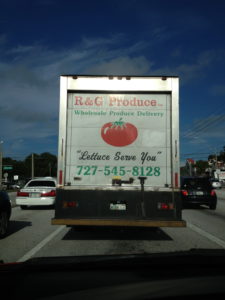 Now, I appreciate a good pun as much as anyone, but when used as a brand’s slogan, I usually find that it to be a weak effort at trying to create something memorable about the product or service. I suppose you could say that this implies better service in getting your lettuce fresh and on time, but it really needs more dressing (Ok, enough puns for now.) to make a differentiating statement. The truck sign did, however, remind me of how many companies try to create a brand by simply coming up with a new slogan or jingle. Most of the ad agencies that I worked with over the years claimed to be branding experts, but so often as soon as they got the assignment, the work started on a new ad campaign, slogan, logo, spokesperson, or package/store design.
Yes, these are all important elements in communicating the brand strategy, but unless a marketer does all the important work first these tools can do nothing more than create awareness. It takes intense and comprehensive research to determine the market potential, the extent of the competition and their strengths and weaknesses, what differentiates your product from the others, and what motivations the customers have to even consider what you offer in the first place.
A comprehensive marketing plan is absolutely critical in the development of a successful brand. Far too often, however, this plan is confused with the media or communications plan and the most of the time, effort, creativity and budget are dedicated to the execution. It’s no surprise that many brands fail even though they were supported by outstanding creative executions in support of a flawed premise for why the customer should try the product in the first place. Burger King has consistently produced some of the best, most creative marketing efforts in the fast food business. Yet, they consistently fail to meet the standards set by their equally aggressive competitors when it comes to operations and service. Having it your way means more than having the right toppings on your burger, it means having an experience that is consistent, friendly and efficient. BK never seems to quite get there. The same can be said for brands like Infiniti, Sears, Discover and many others who fail to clearly define what makes their brand better and why the customer should have a positive preference for them over the competition.
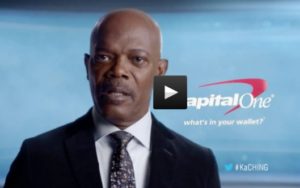
And another thing…Capital One has certainly created a unique brand in the highly competitive credit card business. I sometimes wonder where all that budget comes from to be able to ask the question: “What’s in your wallet?” in every imaginable way. I like Alec Baldwin, but I still am trying to figure out what the Vikings or Brave Heart look-alikes have to do with credit card points, but it certainly has worked. However, the new commercials with Samuel L. Jackson’s hardball pitch for their new Quicksilver card hits me the wrong way. Not that I don’t appreciate a straightforward approach, but does he really have to say “every damn day” to make the point? Cursing and innuendo have long become commonplace in today network programming on television, but it seems a large financial institution like Capital One could use some restraint and make their point without resorting to cursing and spending millions to send a message to our youth that it’s ok to be irreverent no matter who you are talking to. Moreover, what does this have to do with good branding?
4 KEYS TO AN ENDURING BRAND
PRESS PLAY>>TO VIEW KEN’S WELCOME MESSAGE FOR THIS MONTH’S BLOG
While in Michigan a couple weeks ago, I had the opportunity to present to a graduate class in Strategic Brand Communication at Michigan State University.I was impressed by the enthusiasm and interest in branding at the graduate level, but as I was sharing some case studies of brands that continue to succeed and some that have faded out of the marketplace, I realized that many of the students never heard of these brands. Given the fact that nearly half were international students from Asia and Eastern Europe and most of the rest were probably born after 1990, it was not surprising that I had to go a little deeper into the backgrounds of the companies I was using as examples. Yet, there were some that immediately struck a familiar note with the students. Brands like McDonalds, Lexus, WalMart, and Apple were already successful when these students were born and they continue to maintain a strong position that goes beyond top-of-mind awareness because of the relationships that they maintain with their customers.

Like personal relationships, branding must continue to evolve as the situations (markets) change and as the customers change along with them. I showed the students how brands like Circuit City, Oldsmobile, Gateway, and Kmart have disappeared or are fading fast while the others mentioned above and long-time companies like AT&T, GE, Nordstrom’s, Coke, and Hallmark continue to grow in sales and in loyalty with their customers. So, what is it that these brands have in common that we can learn from as we continue to strive to make our brands endure and prosper. I think Dr. Len Berry at Texas A&M hit on the keys when he wrote several years ago about what successful stores had in common. He studied the retailers that not only had long-term positive sales trends but also were excellent stocks, great places to work and expanding their geographic and customer bases. Let’s look at how these relate to enduring brands in all categories:
1) They have a reason for being. It’s not enough just to be around for a long time and have good awareness. A brand must continue to be relevant and adjust with the times and the customers. McDonald’s continues to change its menus, its formats, and its marketing while still maintaining the great taste of its fries and Big Macs that customers keep coming back for. Their move to improve drive-thru’s, menu boards, breakfasts and desserts is an ongoing strategic activity and it has paid off as the company continues to grow here and abroad while faced with increased, tastier competition. Just being a new brand in a growing category is not enough, you must be differentiated by providing a value that creates an emotional bond with the customer.
2) They compete on value not just price. Price certainly continues to be important, but it only gets or keeps your brand on the playing field. Publix has built its brand on making shopping a pleasure, but other grocers (especially WalMart) continue to hammer away at EDLP as a competitive edge. Publix has responded with aggressive promotional offers (BOGO’s) but still maintains services and store improvements that the customers love and it communicates its marketing messages in a way that hits the heart as well as the wallet.
3) Make it convenient. This isn’t just having a store on every corner like Starbucks and Walgreen’s. It’s much more. Today’s customers want the entire experience to be hassle free and reliable. Being consistent in price, in-stock, service and layout, and quality are all expectations that today’s customer wants. Simply being online or having a new app isn’t enough to satisfy today’s customers. Pizza Hut continues to improve its menu while sticking to its pepperoni and mozzarella with new products, services, ease of ordering and ongoing promotions that keep it on top in the pizza wars.
4) Make it enjoyable. The experience must be one that makes the customer feel good about buying your brand. Not only should it be fun to shop but it must be rewarding experience that makes the customer feel good about sticking with your brand. Walgreen’s latest endeavors in showing how your purchase will help people less fortunate around the world complements their convenience and in-store consistency. Target’s support of education does the same while making it a fun place to spend your dollars. Revlon’s long-term support of breast cancer research helps their customers feel good while looking good as well.
Brand’s will endure by sticking to what got them there while constantly seeking ways to remain fresh and exciting.
YOU’RE GOING TO LIKE THIS BRAND…I GUARANTEE IT!
PRESS PLAY>>TO VIEW KEN’S WELCOME MESSAGE FOR THIS MONTH’S BLOG
The news last month that George Zimmer had been pushed out of the Men’s Wearhouse, the company he founded and built into the most successful men’s clothing specialty chain in the country, caught a lot of retail watchers by surprise.
Not only was Zimmer the founder of the chain, but he was also the face and the spokesperson for the company which he grew from one store to over 1100 with nearly $2 billion in sales in 40 years at the helm.

George Zimmer founder Men’s Wearhouse
Many trade writers are skeptical that the company will continue to grow without Zimmer’s familiar face and closing line (“You’re going to like the way you look. I guarantee it.) in every commercial. It brings up the question of how important a CEO spokesperson like Zimmer (or Lee Iacocca for Chrysler and Dave Thomas for Wendy’s before him) is to the success of the brand.
I believe that Zimmer was critical to Men’s Wearhouse, but not because of his consistent presence in their commercials over the years. I, too, had the impression that he wasn’t much more than Fast Eddy in New York or Ollie Fretter in Detroit were as familiar faces on TV. However, over 10 years ago, I had the opportunity to attend a presentation by Zimmer at Texas A&M’s Center for Retail Studies Symposium and it changed my impression completely. It also helped me understand why the Men’s Wearhouse brand was so successful. The familiar CEO spent a little time talking about the chain’s history and their marketing efforts which featured him. Then, he went into detail about how critical complementary sales and training were to building profitable and loyal sales. The key, he said, was the ongoing training that every store associate went through repeatedly to insure they were giving the best service and were committed to selling wardrobes rather than items.
That’s the key to successful retail brands—making sure that your associates live up to the brand everyday, with every customer. We don’t know whether the board at Men’s Wearhouse accelerated Zimmer’s exit because he no longer believed in the importance of the service and training. One thing for sure is that if the board and Zimmer’s replacement at CEO, Douglas Ewert, want to move away from these important components of the brand. The company will, indeed, miss their longtime spokesperson. I guarantee it.
STICK WITH YOUR BRAND…HOLD THE MAYO!
PRESS PLAY >> TO VIEW THIS MONTH’S WELCOME MESSAGE VIDEO
One of the things that I experienced during my 30+ years in the marketing business what the propensity for advertisers—especially retailers—to want to change their marketing messages (and often their brand positioning) too often. Usually it was because the company got tired of the message long before the customer even became totally aware of it. We live and die with the process of presentations, revisions, edits, production, edits, testing, edits, and reviews to the point that we get tired of the message before it has a chance to resonate with our customers. Granted we must constantly review our marketing efforts and evaluate the results, but sometimes it is more prudent to stick with what’s working and focus on the key strengths of the brand to make sure that our customers really know what we stand for. Which brings me to the subject of mayonnaise.
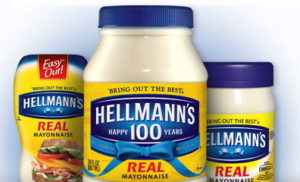 This year marks the centennial of one of the strongest brands in CPG—Hellmann’s Mayonnaise and the company’s marketing is celebrating with an effective campaign that sticks with what has made this the number one brand in the category for most of those 100 years. Hellmann’s is the top-selling mayo since Richard Hellmann started selling it in New York a century ago. Keeping the same product formula—and branding formula—throughout the years, the company has stuck with its “bring out the best” theme for the past 25 years. It’s parent, Unilever, has maintained the same recipe for success from its French roots and continues to insure that it has stayed with Richard’s wife’s version of the original recipe while constantly and consistently showing how mayo makes almost everything taste the best.
However, the mayo has not gone stale. Hellman’s has a cutting edge promotional plan to celebrate the first 100 years with aggressive TV and print complemented by digital ads, a Facebook page, YouTube videos featuring chef Mario Batali and a smart phone app with 30 of Batali’s favorite recipes using Hellman’s mayo. It all spreads on the success that has given the brand a 31.1% share of the $1.87 Billion mayonnaise market. Being first in the market isn’t the only advantage to the Hellman’s brand, it continues to build on its heritage and taste with a brand strategy that is consistent, aggressive and on target.
Great brands don’t have to change or stray from their roots. Like Hellman’s, brand such as Tabasco, Rolex, Ben & Jerry’s, Nordstrom’s and others have found that staying with what got them there is a great brand strategy.
DON’T FORGET TO CHECK OUT AMAZON AND KINDLE FOR “Brain Branding—Activate the Brain, Stimulate Your Brand” by Ken Banks and Robyn Winters. A new way to look at growing your brand—even if it’s been around for a 100 years!
BRANDING IS MUCH MORE THAN ADVERTISING – WHY RON JOHNSON FAILED AT JCP
PRESS PLAY>> TO VIEW KEN’S WELCOME MESSAGE FROM FRANCE.
With the ongoing poor results reported by JC Penney over the past several months, it came as no surprise to me as I arrived in France a couple weeks ago to learn that he had been fired. No matter how good your resume is, non-stop double-digit declines in revenues and profits—and the resultant plummeting of the stock price—Johnson couldn’t expect to survive the uproar from the board, Wall Street and long-time customers. I’ve written about the branding makeover at JCP a couple times this past year, but I felt it necessary to give one more opinion on why the guy who was so successful at Apple just couldn’t make it happen at a conventional department store.
First, let’s look at what Johnson had at Apple. First, Apple is a brand that was truly differentiated from the competition. Cutting-edge design. Breakthrough technology. Futuristic apps and products. These were all in place before he was so successful at Apple. Taking the brand principles that were in place and applying them (very well I must admit) to the retail operations for Apple truly set the stores up as a model for a consumer centric experience and one where the people, the design and the operations lived up to the brand promise everyday.
Second, Johnson had a strong, brand evangelist as a leader in Steve Jobs. While he was demanding and relentless, Jobs set a standard that people half as smart as Johnson would have succeeded by following. No such leadership existed at JCP. Johnson’s predecessors were traditional department store veterans who chose more to emulate and copy stores like Kohl’s and Macy’s and really never stood out as anything special. Business was built on ongoing promotions and awareness and while that generated volume, it didn’t develop a hallmark brand that the board wanted when it hired the new regime last year.
Third, JCP had built its growth in recent years on these promotions and coupons but failed to develop a loyalty to the stores and the people that quickly evaporated as soon as Johnson’s team adopted a new, everyday (somewhat) low price strategy. As I have written in this blog before, the mistake was to go to the extreme. JCP should have maintained a consistent (reduced) promotional plan to maintain it’s loyal sale shoppers while it developed the look and messaging that would have differentiated it from the other department stores.
Apple didn’t have to have sales because it built its brand on the products and the service that were so far above the competition. JCP had to gradually climb out of the hole it had dug for itself over the years with me-too advertising.
Ron Johnson, Michael Francis and the others in this new regime didn’t suddenly get dumb when they got to Plano. No they just tried to apply the principles of a strong brand to one that needed a lot more repair than they bargained for.
A REASON FOR BRANDING
PRESS PLAY >> NOW TO VIEW KEN’S WELCOME MESSAGE.
I was watching television a couple days ago when a new Sears appliance spot came on…and it was really creative and broke through the clutter. Frankly, I’ve been pretty impressed with the creativity in Sears commercials for several months now and have to give their advertising team credit for making a valiant effort to get the store back on its feet. (Can’t say the same for its sister store Kmart, however.)
 Unfortunately, I don’t believe any advertising—no matter how creative or well placed it is—can make up for the lack of a meaningful brand strategy. Despite all of the aggressive ads, Sears simply isn’t a factor to the consumer anymore. In many of the groups that I present to or work with, I ask the question “How many of you have shopped or considered shopping at Sears over the past 6 months?” The answer is almost universally a resounding “None!” It’s hard to believe, but what was once the #1 retailer in America is no longer a factor for most customers these days. If you wonder why this happened, I suggest considering what Dr. Len Berry of Texas A&M wrote many years ago about what successful store have in common. The number one trait that the hot stores shared then—and now—is that they have a reason for being. And that reason is not just because there are other retailers who offer the same merchandise and services in a similar box. It’s a real reason for existing and for being firmly entrenched into the shopping lists of many consumers. Ask yourself (unless you work there) if Sears disappeared tomorrow, would you really miss them? Would you wonder where you were going to shop for appliances, tools, paint, automotive supplies and service? All of these were distinguishable strengths that Sears once maintained in the marketplaces. They not only were top of mind, but they were almost synonymous with these categories in their heyday.
The problem is that Sears forgot what its brand was really all about way back when they tried their “Softer Side” and other failed formats. It forgot why people shopped them and ignored what the competition was doing in their own backyards with the categories I mentioned above. With all the negativity surrounding JCP these days, I suspect that despite some really creative print and broadcast advertising, they have moved away from what has made them a factor with customers in the past and their once loyal shoppers aren’t rejecting them. They simply are not considering because they have no reason to.
The first step in an effective brand strategy is to determine what your value is to your target customer and how will you differentiate your store or product from the competition. It is not just running a great ad or campaign. It’s providing a reason for being everyday.
BUILDING YOUR BRAND WITH SOCIAL MEDIA
PRESS PLAY >> TO VIEW KEN MESSAGE FOR JANUARY.
This year’s annual National Retail Federation convention exhibited more energy and optimism from the attendees (over 27,000 of them) than I have seen over the past several years. The Expo was packed into three halls with high tech tools that would help just about any retail establishment operate more effectively. The sessions provided passion and excitement for the future and stressed the importance of retail to the global economy. And talk of social media and mobile marketing was everywhere you went. Indeed, it’s time to recognize that these cutting edge marketing tools have come of age and should be thought of as requisites for any sound branding and promotional plan for today’s retailers.
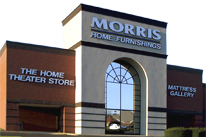 For example, take the case of Morris Home Furnishings from Dayton, Ohio. VP Marketing Robert Klaben provided some interesting examples of how his company was using social media to increase sales to the audience at the Main Street Session that was targeted to independent retailers. Kleben not only showed how Morris used Facebook (and other tools) to interact with their customers on an ongoing basis, but he showed how this has become one of the best measurement tools for evaluating the response to many of their promotions and loyalty building efforts. Sure, they were generating increased traffic and sales, but they have also been able to create loyalty that can be measured by the interactive responses and feedback that their customers are eagerly providing. These are not simply sales promotions, but brand building programs that are building relationships that will bring the customers back to their stores many times in the future. Granted the furniture business is not a frequent store visit experience, so you need to build an ongoing communication with your customers to be the first place they think about when the need for furniture arises. Their experiences show that the dialogue is building fast and the relationships are built on the heart not just the wallet.
 It’s time for more retailers to take the same approach as Morris. It’s now expected that a retailer will have a robust website that will provide them not only a chance to get product information but also help them complete the transaction. This simply gets you into the ballpark. However, to build a strong brand relationship, social and mobile marketing can certainly accelerate the process. Remember, convenience is more important than ever and the online media help make it easier than ever before to shop and make an intelligent purchase without ever having to go to another mall. Facebook has gone far beyond being a place to share your personal experiences. It is the forum for letting retailers know what you like and how you want your purchase experience.
Forums like shop.org’s annual conference and the CRMC in Chicago are growing each year because of the interest by retailers in learning more about how to use these media. And the conferences are loaded with great information about how to use them to not only increase your business but also improve your brand. It’s time to stop thinking of these as separate tactics and to include them in the strategy development for any successful marketing and branding plan.
LEADERSHIP—THE KEY TO A STRONG RETAIL BRAND
PRESS PLAY >>>NOW FOR KEN’S WELCOME MESSAGE
As the blitz of holiday advertising reaches a crescendo, it’s refreshing to see some retail marketers stick to the strong branding messages that has separated them from the rest of the pack. I’ve talked about Hallmark many times in the past when it comes to holiday advertising, but I was reminded about how strong their strategy is when I saw another great spot for Publix Supermarkets the other night (coincidentally on the Hallmark Channel). A great message, well executed that inspires and respects the viewer and customer.
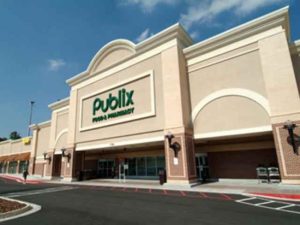 Shortly, after viewing the spot, I read the news that former Publix president and chief marketer had passed away in Lakeland, FL. In case you haven’t hear of Mark before, suffice it to say that he was more instrumental than anyone in making Publix a retail powerhouse in the southeast helping to build Publix sales from $3.2 Billion when he took over the top position to $27 Billion in just over 1000 stores in only five states. We won’t even talk about the dominant market share that Publix has built and the loyalty it has developed with its customers over the years. More significantly, however, is how Mark’s vision made Publix a brand that is part of the markets that its stores dominate. There are many factors that contribute to this strong position—well-run, well-merchandised stores in prime locations, loyal employees who love to work in a grocery store (although they don’t think of it in those terms), constant improvement in layout and design to really make “shopping a pleasure” (Publix’s long established slogan), and finally, to break-through creativity in their marketing that not only built a memorable brand, but also fought off the price competition so prevalent in this category of retail.
Publix brand products are not only consistent in package and quality, but they often outperform the national brands at a better price when it comes to brand quality. All this is a result of the leadership that Mark Hollis provided as marketing chief and then president. The standards were high, the creativity was encouraged and expected, the messages consistent with the company’s mission. Take a look at Publix’s most recent commercial (http://www.youtube.com/watch?v=wLJbYXRXtyU)
While Publix is as aggressive as anyone with strong, ongoing print promotions and a powerful BOGO strategy, it still reaches out to the customer every week of the year to maintain a brand that’s part of the lives of the customers it serves. That’s Mark Hollis’ legacy.
As we celebrate the holidays, I hope that your brand—whether it’s a store, a product, a service—or yourself—continues to build a relationship that endures.
Wishing you a Merry Christmas and Happy New Year!
Ken
RISK BEING DIFFERENT WITH YOUR BRAND!
As I sit here facing the Atlantic from a balcony of my condo at the Palmetto Dunes resort at Hilton Head Island, SC, it’s very apparent that the developers of this island and the resorts that occupy it had a unique vision when they started building some 50+ years ago. Having visited beach resort cities from Maine to Key West, I have always been disappointed how the developers and communities seem to think that tacky and overcrowding were the prerequisites for appealing to the tourists that support their economy. Hilton Head risked being different—to the point that if you drive down the main street of the town (HWY 278), you wouldn’t even know that there’s one of the east coast’s most beautiful beaches just a couple blocks or more away. No tall skyscraper condos or 3-star hotels, no neon signed surf shops, no strips of fast food or lousy food restaurants, no billboards. Sure there are businesses, but they have substituted taste and design in making this a pleasant drive despite the traffic. Just like other successful brands, Hilton Head sought to differentiate itself golf resort with beaches and tasteful homes for people who really want a relaxing beach vacation. Great restaurants are tucked away with the golf fairways and retail blends in with the many trees that shade an otherwise hot and sunny beach resort. This is a brand that works and the lodging and resort rates attest to its appeal—even in the off-season.
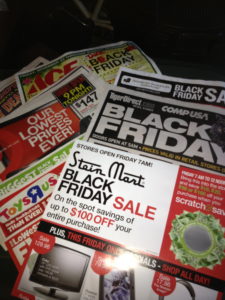 That brings me to Black Friday! Once again this year, retailers have abandoned any semblance of building a brand prior to the holidays in favor of the biggest sale of the year (or so they say). Even the name—formerly a trade description for the sales and profit potential of the day after Thanksgiving—is nothing more than a big clearance type of event. And it’s not just the retail stores. Black Friday is a good time to buy a car, clean your carpets, get your teeth whitened and just about any other business that is trying to get more customers at this time of year. Don’t have anything more to say about Black Friday? Just open the store even earlier…like Thanksgiving am or maybe even Wednesday pm. As a student of retail marketing, I admit that I went through every circular in the Thursday paper and didn’t find one that really stood out. Kohl’s and JCP outweighed the others but the messages were lost in the Black Friday shouting and screaming. Kind of like driving down the Grand Strand at Myrtle Beach or A1A in Daytona. Ycccch! The broadcast was equally boring, although Target dared to be different with some silly carolers that turned me off after the 6th time of seeing the spots (in one night). It’s time to give customers a reason to shop and then have a sale that means something other than a day of the week.
Finally, CBS News had interviews with the Ron Johnson of JCP and Bruce Nordstrom of my favorite department store this week. Essentially, they were asked if there is any hope for department stores in the retail marketplace. They cited the many names of stores like Wanamakers, Marshall Field and Dayton’s that have disappeared. I have to give credit to Johnson for sticking to his guns about the changes at JCP despite declining revenue, profits, and stock prices. I have to admit that their circular still is the most appealing of all in the paper and their store changes really do make sense. As both of the CEO’s said, the department stores have to give people a reason to come to their stores by way of experience rather than just price. Nordstrom has been doing that for years and now has the technology in the hands of its associates to enhance the experience even more. Johnson says there is not alternative but to succeed. It’s all risky, but as Randy Gage points out in his new book—Risky is the New Safe—taking the easy road of emulation and following the competition is not the way to build a successful business today.
BRANDING TRUMPS BAILOUT EVERYTIME!
The political campaigns are in full force and once again I’m disappointed by the lack of branding by both parties in trying to get their candidates elected or re-elected in. November. The incessant battering of the opponent, I believe, does nothing more than turn off the voter and hide the qualifications of the candidates to lead our country. But, I’ve said this before in these articles–four years ago to be exact–so I won’t belabor that point. Which brings us to the subject of car advertising. Huh?
The good news from Motown, my hometown, is that car sales for all U.S. brands is up. And the threat of once-strong corporations going out of business has subsided for the time being. Of course, our political candidates credit the government bailout for saving the companies (GM and Chrysler ) and the thousands of jobs (not to mention the survival of our entire middle class society ). No doubt the millions of dollars in “loans” helped resuscitate the two struggling companies, but I believe that their recovery has more to do with branding than financing. Let’s take look at Chrysler to see how branding and inspired leadership made the recovery possible.
Three years ago, Chrysler was all but given up for dead. With bankruptcy looming and sales and market share dwindling, it certainly wasn’t a good investment much less be the first choice of car shoppers. While the bailout by the government was critical, more important for the recovery was the merger with Fiat of Italy and the new CEO, Sergio Marchionne. He had led Fiat’s recovery and every time I see a little Fiat 500 on the road today, I think back to the 1960’s when the same model was more like a toy than an economy car. They were small, Spartan, and didn’t really work too well. And they disappeared from the American marketplace. Fiat recovered by adding in exciting brands like Ferrari, Maserati, and Alfa Romeo, the company is a European powerhouse today despite the economy over there.
The key to Chrysler, however, was the arrival of Marchionne as CEO. He set new standards, shook up the organization, formed a new leadership team reporting directly to him, and restored confidence to the work force at the company. More important, he revitalized the brands—focusing on the strengths of the Jeep, Minivans, and Dodge light trucks. Once the strategies became more focused and the people became motivated and confident, the company started to re-brand itself to the consumers. It’s “Imported from Detroit” set a new standard for the company—and its hometown. The super bowl spots of a couple years ago took a no nonsense approach. Brand advertising for its models was creative and on target. Most important, the cars lived up to a brand promise of style and quality as well as performance that comes with an Italian influence.
And it’s working. Sales are up in double digits. Income was up $900MM for the first half of this year even while paying off the $6 Billion in loans to the federal government (early). The launch of the new Dodge Dart (definitely not the same Dart that my parents owned in the early 60’s) looks promising with exciting touches from their new Italian relatives. The brand is creating believers in the company, and by doing so is on the way to recovery. Marchionne says part of his plan was to move out of the Chairman’s Ivory Tower offices in Auburn Hills and down on the floor with the people building the cars and the brand. His influence is working and the brand is alive and exciting again.