CRUISING–BRANDING THE WAY WE TRAVEL!
PRESS PLAY>>TO VIEW THIS MONTH’S WELCOME VIDEO
CRUISING—BRANDING THE WAY WE TRAVEL!
As I stood recently and gazed at the life-sized model of Noah’s Ark in (of all places) Williamston, Kentucky recently, I was amazed at the 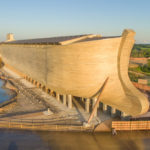 sheer size of the boat that took all those animals two-by-two according to the Book of Genesis. It’s the same awe that I have experienced as I gazed at cruise ships at the Port of Tampa, San Diego, Miami, and Sitka, Alaska over the years. I just can’t imagine how those mammoth ships with 3000-5000 passengers and crew and all that food manage to stay afloat and weather the storms of the sea day after day. More significantly, I’m still amazed at how the cruise industry—and the brands that make up the fleets—continue to grow every year despite the intense competition from planes, trains and automobiles.
According to Cruise Market Watch, cruise ships carried over 25 million passengers worldwide in 2017 (over 14 million in the U.S. alone) and will continue to grow at a rate of almost 7% to nearly 28 Million passengers by 2020. This year the cruise lines will add another 13 ships (all bigger and with more amenities than ever) this year. And the potential is enormous when you consider that the total number of cruisers is still only half of the visitors to Las Vegas.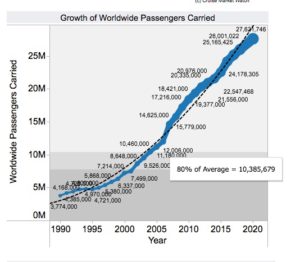


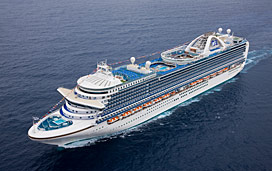 Now, I’ve never been a big fan of ocean cruisers, having only taken two in my life (although the Disney Cruise could make me change my mind). I have taken four European river cruises in the past few years and really have enjoyed that experience immensely and expect we’ll be on a few more in the future. I like the idea of being with only 100-125 other passengers, never being more than 100 yards from shore, having excellent dinners in a first class restaurant, and being able to go ashore to see great cities easily and comfortably.
Still, I wonder why cruising is so popular when it is so easy to fly (ok air travel isn’t what it used to be) and get to your destination quickly and efficiently. Airports are more convenient than ever. Airlines (like Allegiant) are giving nonstop service to many secondary markets. Airfares still have some bargains and good reward programs. And schedules continue to grow so you usually can go when you want to where you want all year. I believe the growth comes from the major lines like Princess, Carnival, Norwegian, Holland America etc, appealing to more travelers branding themselves as a more relaxing, less hassle, more exciting way to travel. Princess Cruise lines a few years ago ran an award winning commercial that hit the airline travel problems right on the head. Take a look at it by clicking on this link:
https://youtu.be/-cjPhdZBey8?list=PLdjNdhdEOrak-EoFvJxdpzNSpTWF4hoKU&t=2
There’s no doubt that air travel has its downfalls and this spot uses hyperbole to accentuate all of them and how cruising is a relaxing alternative. I mentioned Disney who continues to expand its destinations for its cruise ship division. Disney has managed to take the benefits of its theme park and media brands and execute them on their ships with personal service on board as well as in setting up the trip. They consistently prove that these cruises aren’t just for kids either by providing adult areas and activities that make us grandparents happy to pay for the entire family as a great excursion for every member. Princess for years has developed loyalty by not only providing a great cruise experience but also by providing their own travel company excursions at every port to make it easy and a one-stop process. Carnival continues to appeal to younger travelers with many kids activities on board and at the ports. And I could go on. Cruise ports are more travel passenger friendly as well. They have figured out how to brand themselves and build their business with loyalty perks that bring back cruisers time and time again. (we have friends who have cruised over 20-25 times).
It’s another case of understanding your customers and competitions, then developing a brand strategy that provides value and a relationship that builds market share. I’m not sure Noah’s brand was targeted at a better alternative to a flood or seeing animals in nature or a zoo, but provide what people need and want and then marketing creatively and consistently build a growth industry.
 During the ‘80’s, I never was that concerned that Walgreen’s would beat us in advertising. While they were aggressive with weekly promotions and multi-media budgets, their ads were pretty mundane and repetitive, and they never scored highly in the ad research that we conducted. However, where they excelled was in their expenditure to develop the digital systems that would provide them with more timely sales and inventory data than we could only hope to imagine. This insured that they would have the right items in the right stores in the right quantities. As we learned in our own strategic research, this would be a dramatic competitive advantage as they matched Eckerd store for store and their market share reflected it was working. As Walgreen’s grew and Eckerd dissolved, this capability also enabled them to communicate more effectively and more directly with their customers on an ongoing basis and that has paid great dividends in building loyalty and increased sales per store and per customer.
 Industrials companies. However, it is more than just significant revenue growth. Walgreen’s has built its brand on an understanding of what has happened to the US economy and to the country’s consumer buying habits.We are becoming a service-oriented country and with the increased demand for health care products, it has served as a perfect storm for Walgreen’s to grow its market share despite even more competition than ever before.
 It was reported this week that Eddie Lampert, CEO of Sears Holdings, was pushing to
  have his separate company purchase the Kenmore and Sear Home Improvement brands/businesses from his troubled retail operation. This is yet another step in the demise of what was once one of the premier brands in American business and certainly one of the legendary brands in the retail industry. The beat continues to go on. Sears and its other struggling retailer have been on a slippery slope ever since Lampert bought the companies several years ago. The only news from the stores has been how many are closing in our markets on a regular basis. It’s long been known that the only value the company has are its real estate holdings. Customers have long forgotten them as a viable option for their shopping dollars and certainly as a place to shop (period).
 What is really sad is that the company, in addition to having two of the strongest retail brands for decades and
  millions of loyal customers, also had some of the strongest product brands in the country. Kenmore set the standard for home appliances and when I was at Circuit City a couple decades ago, it was the number one choice for homeowners in appliances and also at the top of mind awareness for most appliance categories. The quality of the brand still is one of the best according to Consumer Reports (thanks to Whirlpool’s manufacturing expertise) and it has expanded distribution beyond its parent company’s stores. However, the lack of branding has certainly taken its toll in the past few years.
 Sears was once the place for the things you need for home improvement projects and for the service before and after installation. That, too, has faded away as Home Depot and Loew’s continue to flourish and be the first choice in product and reliability. The company has already sold of its Craftsman Tool Brand (to Stanley/Black & Decker) and it continues to have a strong brand loyalty but was so tarnished by Sears that the private label brands on the big two DIY stores (and Harbor Freight) that the demand has diminished. DieHard batteries became the replacement of choice for auto batteries and flourished when Sears automotive service was a preferred choice. Bad decisions and dishonest practices killed the business and hurt one of the top brands in the industry. I could go on, but suffice it to say that putting a financial person at the top of most retailers is (as the late guru Peter Glen used to say) the first step to failure, while putting a marketer at the helm can bring success.
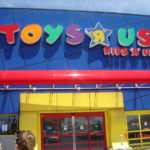 really a case of having, updating, and maintaining an effective brand strategy that led to the lack of interest by so many customers over the past couple decades. Most big box category-killers (like Toys, Circuit City, Office Depot etc.) opened up to the “wows” of customers who had never seen so much of one category in one place. Unfortunately, as successful brands know, you have to consistently strive to improve and react to the customers in order to maintain their relevance. Price alone only gets you on the playing field. Selection improves on getting trial. But becoming and maintaining a brand that people love, that’s what builds an enduring brand.
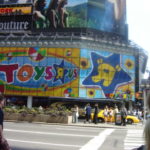 Toys R Us had lots of toys, for sure. But their price image never seemed to keep up with their inventories. Nor did the customer service. Nor did the operational excellence as the stores became worn down and tired. There are always new innovations in the toy market and yes, TRU always had the latest trends. However, they never seemed to create an excitement that was present in the department stores during the holidays in their hay day. The company built a destination store near Times Square in New York that rivaled the excitement of FAO Schwarz around the world, but never was able to translate that excitement in its hundreds of branches in the suburbs of American cities. It’s marketing never went beyond it’s original “I don’t want to grow up. I want to be a ToysRUs kid” campaign. Despite efforts to revive the theme over the years. There was no enticement for parents and grandparents to come back and not much youthful excitement of the kids to convince them to go back as well.
 I was speaking recently with a long-time advertising colleague and friend and we were talking about the state of retail marketing. He indicated that he thought that all of the hype about Amazon was exaggerated and that brick & mortar retail was still the foundation of consumer selling. I agreed that “no, retail stores were not going to completely disappear anytime soon”, but I felt that the retail landscape had been changed forever. And, I pointed out that Amazon was probably the biggest factor in this retail revolution. Granted, the internet in total was the reason that shopping patterns had dramatically changed, but Amazon has been the leader in the changes in the way people shop more than any other single marketer in the world.
 package with those smile symbols on the side should be evidence enough that Americans are shopping more from their laptops and phones than we ever imagined just a few short years ago. And the pattern crosses all demographic and economic profiles with male and females, young and old, rich and poor, etc., etc. and there is no turning back. The disappearance of shopping malls personifies the changing shopping habits, but the delivery boxes demonstrate how we have become a nation of purchasers instead of a land of shoppers more than ever. I have to admit that we receive on average 2-3 Amazon deliveries a week and we don’t consider ourselves online junkies at all. The reason this is so common is simple. Amazon has created a brand that means convenience, time-saving, and savings for just about anything that you want to buy.
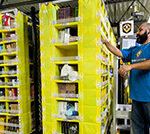 I’ve purchased everything from pool pumps to green tea, from auto wheel covers to protein shakes, and more and more. The reasons are simple. 1. It’s easy. I can buy just about anything we need with one click with Prime. 2. Not sure what you need? Search in general topics and you’ll find what you need quickly. 3. Not sure what to pay? You can compare prices at conventional retailers, online, catalogues, you name it…and the savings are usually significant enough that it’s a no brainer.
 recognition service has Siri running and fostering a number of other in-home voice service like Google and Home Pad growing at a hectic pace. The other big news recently was the launch of Amazon Go, a check-out free food store that is a game changer in the grocery industry using technology being developed for other high-tech innovations. Over 15 years ago, I attended the National Retail Federation’s annual convention in New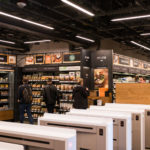
 A TRIBUTE TO A GREAT AD MAN AND FRIEND
 John Lewis consistently sets high standards for Christmas creativity that reflects their unique partnership strategy for their stores and online business. This year they feature Mox the Monster in a fairy-tale-come-true spot that hits home. The Beatles’ classic tune sets the pace and completes the engaging message.
 ALDI has been a leader in food retailing in Germany for over 40 years and it’s making aggressive inroads in building market share in the US. The chain has grown to over 1700 stores in 35 states serving over 40 million customers each month in their simple, streamlined stores and product assortments. Their advertising here reflects that organization but when it comes to branding, the company hasn’t exported its creativity as seen in this spot featuring carrots. Not your most typical Christmas product (unless you’re Frosty) but the veggie makes sense in these UK spots. Take a look by clicking on this link
  M&S (Marks & Spencer) was founded in 1884 as a single-stall retailer that has grown internationally as a multi-channel retailer with 914 stores serving 32 million customers in the UK. It does it successfully by providing a unique British shopping experience and by tying in with a favorite in Britain—Paddington bear. Take a look by clicking on this link
  McDonalds may not be the first place you think of when it comes to carrots (yes, carrots again for Christmas…maybe a new trend in the UK) but the company has always set the standard for great campaigns here in the states but this year the US has seen nothing but breakfasts and burgers while overseas the company remembers that McDonald’s is the #1 convenient fast food store.
 NFL Shops may not be the first place you think of at this time of the year, but their merchandise becomes more relevant as the playoffs near. Usually, the branding is tied only into the weekly televised games but this year they have a special holiday message that scores a touchdown in my branding offense.
 Coke is a part of many Christmas celebrations and gatherings and its awareness continues to grow each year. This year in Europe Coca Cola gives a whole new meaning to sharing the Christmas spirit not only with your neighbors but good old St. Nick as well.
 I hope you took the time to click on and watch these commercials. Not only is it a great example of holiday branding, but they surely will bring the Christmas spirit to you as well.
Recent Comments