
DO SOMETHING SPECIAL WITH YOUR BRAND!
PRESS PLAY>> TO VIEW KEN’S HOLIDAY MESSAGE
Merry Christmas! It’s a special time of year and a time to do something special with your family, friends, associates…and your brand.Marketers have always used this time of year to break the mold of their ongoing ad campaigns to be more creative, more promotional, and (unfortunately, not often enough) do something special for their customers and employees.
 The Macy’s Thanksgiving Parade is a special tradition that helps kick of the holiday season for retailers all over the world. Yet, it is also a wonderful sales promotion event to generate sales, awareness, and strengthen the store’s brand as a special place for holiday gift purchases.
 Bass Pro Shops has created Santa’s Wonderland at its mega-stores for several years now, but before you say that “Well, what’s new about that? Stores and malls have had Santa for years.) take a trip to your nearest Bass Pro and experience the transformation of the stores and their customers into a Christmas right out of the Hallmark Channel.
And it’s not just retailers who capitalize on the season to do something special. If you haven’t seen it yet, take a look at this five-minute video on what Canadian airline WestJet did this winter. This is truly an amazing event:
http://www.youtube.com/watch?v=zIEIvi2MuEk
The idea of making the Christmas wishes of all the passengers on two of their flights sounds simple enough, but it took the efforts of everyone from airport agents to the baggage handlers to make it happen seamlessly. Corporate support from other companies like Best Buy helped them share in the positive media coverage that this event achieved. And it was a lot of coverage: 27 Million views on YouTube in less than a week; major news coverage in nearly all national network and cable news programming; buzz on social networks. All giving testimony to the kind of service (It took 175 employees to pull off this event.) and commitment that WestJet must provide its passengers on an ongoing basis. The interactive kiosks at the gate were state of the art, the delivery of the gifts on the baggage carousel was an event in itself, and the wonder and surprise of the lucky Calgary-bound passengers reinforced WestJet’s brand as an airline whose employees genuinely care about making every flight special. If you want to read more about what it took, click on:
http ://www.cbsnews.com/news/westjets-holiday-video-becomes-an-online-sensation/
for just one of the news coverage articles that have appeared
A sales promotion event? Sure. But it goes beyond that and it’s disappointing that more advertisers don’t do something special for the holidays that helps reinforce their brands the rest of the year. Have a great Christmas and a Happy New Year!
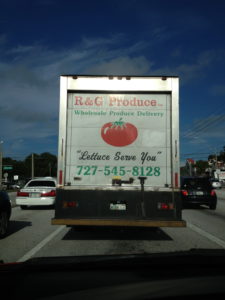 Now, I appreciate a good pun as much as anyone, but when used as a brand’s slogan, I usually find that it to be a weak effort at trying to create something memorable about the product or service. I suppose you could say that this implies better service in getting your lettuce fresh and on time, but it really needs more dressing (Ok, enough puns for now.) to make a differentiating statement. The truck sign did, however, remind me of how many companies try to create a brand by simply coming up with a new slogan or jingle. Most of the ad agencies that I worked with over the years claimed to be branding experts, but so often as soon as they got the assignment, the work started on a new ad campaign, slogan, logo, spokesperson, or package/store design.


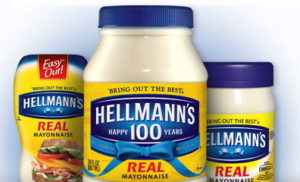 This year marks the centennial of one of the strongest brands in CPG—Hellmann’s Mayonnaise and the company’s marketing is celebrating with an effective campaign that sticks with what has made this the number one brand in the category for most of those 100 years. Hellmann’s is the top-selling mayo since Richard Hellmann started selling it in New York a century ago. Keeping the same product formula—and branding formula—throughout the years, the company has stuck with its “bring out the best” theme for the past 25 years. It’s parent, Unilever, has maintained the same recipe for success from its French roots and continues to insure that it has stayed with Richard’s wife’s version of the original recipe while constantly and consistently showing how mayo makes almost everything taste the best.
Recent Comments