HOLIDAY BRANDING REALLY WORKS!
PRESS PLAY>>TO VIEW THIS MONTH’S WELCOME VIDEO
HOLIDAY BRANDING REALLY WORKS!
Spending the Thanksgiving holiday with our family in the North Georgia Mountain reminds me of how important relationships are at this time of the year. Watching some of the multitude of holiday advertsing on the air and online, also reminds me of how so many products, services and store forget that it’s the relationship that they have with their customer that determines how strong their brand is and that strength is what determines the success of their holiday sales at this important time of the year for business.
Once again the papers are filled with promotional sales for one day sales, black Friday specials and lowest prices of the season. All of these are holiday marketing staples, but it’s the branding that really drives the customer to choose one product over another when deciding on a source for gifts. Fortunately, there are still some companies that choose to make a difference and creatively reach out to build a relationship at Christmas. Let’ take a look at a few shining examples that are worth taking the time to spread my Christmas cheer this year:
 Bouygues Telecom is the French leader in internet and cellular communication and they realize that the real benefit of their technology is enabling their customers to not only share holiday greetings but also to be able to relive the memories of Christmas’s past with their family. This spot translates well using a pop standard with scenes that bring a smile to everyone. Click on the link below
Macy’s. To be sure, department stores continue to diminish in their importance at what once was their most important selling season. A  lot of that is due to forgetting to brand themselves in the midst of all the promotion. Macy’s is no exception to that diminishing trend. However, the store continues to maintain important traditions that are memorable part of our Christmas traditions. The Thanksgiving parade, the wonderful Herald Square store windows, and the Believe campaign continue to separate the stores from all the other retailers. Take a look at this video that captures the unveiling of the store window on a snowy night on Broadway. Click on the link below.
https://youtu.be/2vsnrWVc1ro (MACY’S WINDOWS NYC)
Now take a look and listen as Macy’s partners with Delta Airlines to present a musical tree at its parade this year. Click on the link below:
https://youtu.be/o7rMn3pcslY (MACY’S SINGING TREE WITH DELTA AIR)
Frangrance gifts are a big part of all retail holiday sales, Macy’s adds some branding its relationship in the following spot. Click on the link below:
https://youtu.be/250jwnkdz-Q (MACY’S WONDERS OF GIVING SIG. SCENT)
 Publix has long been my favorite for branding and setting the standard for holiday creativity in advertising. This year is no different. Yes, you can get Turkeys for 99 cents a pound, but you can welcome home your son to a dinner that makes the food special to every family. Click on the link below for this great spot?
Finally, Apple has taken the spot for technology on Christmas lists for many years now, and they’ll be on the top again this year. But in  this video “spot” Apple creates a new animated special that highlights the importance of Christmas wishes that need to be shared. I didn’t quite grasp the message in the commercial but this is worth the 3 minutes to tell the whole story of what technology can do to help a young girl share here holiday wishes. Click on the link below:
I hope you’ll take the time to view these holiday wishes and hope you have a Merry Christmas this year!!

 While in my home town, Detroit, for a high school reunion a couple weeks ago, I took a trip down to my undergrad alma mater, Wayne State University, to visit the new Mike Ilitch School of Business Building which was dedicated about a month ago. I was impressed by the building and by its location which was about a mile from campus and right next to the new Little Caesar’s Arena, home of the Detroit Red Wings (which Ilitch owned) as well as the Pistons NBA team. I was impressed by the new arena as well as nearby Comerica Park (home of the Tigers, which is also owned by the late Ilitch’s family). My first impression was “Wow, that’s a lot of pizzas to build these mammoth, modern facilities! Indeed, it is and it’s particularly amazing given the competitiveness of the pizza industry in the US.
 and local Detroit favorite Buddy’s for a share of the pizza market. Little Caesar’s established itself years ago by marketing the fact that not only are its pizzas really delicious but that you get two pizza pizzas every time you order one at the same prices Don’t forget the take and bake stores as well which includes Papa Murphy, Straw Hat, and the Sam’s and Costco Warehouse stores). Of course, we all have our favorite local independent pizza places which help make up the over 62 million pizzerias who spread mozzarella and pepperoni in every corner of the US (and the world for that matter). So, what make one pizza shop succeed in such a competitive market place? Sure, there are the multitude of coupons that flood our newspapers, mailboxes and on-line every day. And there are the thousands of delivery cars and vans that deliver hot pies to our front doors (and don’t forget Uber and Lyft as well). However, I believe it’s branding that continues the growth of this popular staple to our diet.
 I recall my first pizza job when I was in grad school at Pizza Hut which was a regional player at the time. The key to Pizza Hut’s brand was its special sauce which was confidentially delivered to each hut weekly. We made all the rest of the pie like any other but when we added the herbs and spices to the sauce, the brand took on its uniqueness. Since then, Pizza Hut strengthened its brand with innovative offerings like personal pans, stuffed crust, pan pizzas and unique toppings and amenities.
 insure it still gets there hot whether you order delivery or pick up at their state-of-art system stores.
 Papa John’s went even further with its “Better ingredients, better pizza” by building on its owner as an icon (although that’s been tarnished lately).
 Jet’s built on its Detroit roots by offer a square pan with a crispy crust just like Motown Buddy’s (which was included in my reunionvisit as well).
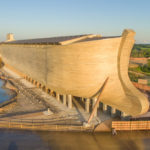 sheer size of the boat that took all those animals two-by-two according to the Book of Genesis. It’s the same awe that I have experienced as I gazed at cruise ships at the Port of Tampa, San Diego, Miami, and Sitka, Alaska over the years. I just can’t imagine how those mammoth ships with 3000-5000 passengers and crew and all that food manage to stay afloat and weather the storms of the sea day after day. More significantly, I’m still amazed at how the cruise industry—and the brands that make up the fleets—continue to grow every year despite the intense competition from planes, trains and automobiles.
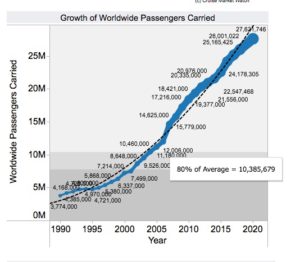

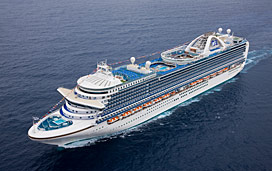 Now, I’ve never been a big fan of ocean cruisers, having only taken two in my life (although the Disney Cruise could make me change my mind). I have taken four European river cruises in the past few years and really have enjoyed that experience immensely and expect we’ll be on a few more in the future. I like the idea of being with only 100-125 other passengers, never being more than 100 yards from shore, having excellent dinners in a first class restaurant, and being able to go ashore to see great cities easily and comfortably.
 During the ‘80’s, I never was that concerned that Walgreen’s would beat us in advertising. While they were aggressive with weekly promotions and multi-media budgets, their ads were pretty mundane and repetitive, and they never scored highly in the ad research that we conducted. However, where they excelled was in their expenditure to develop the digital systems that would provide them with more timely sales and inventory data than we could only hope to imagine. This insured that they would have the right items in the right stores in the right quantities. As we learned in our own strategic research, this would be a dramatic competitive advantage as they matched Eckerd store for store and their market share reflected it was working. As Walgreen’s grew and Eckerd dissolved, this capability also enabled them to communicate more effectively and more directly with their customers on an ongoing basis and that has paid great dividends in building loyalty and increased sales per store and per customer.
 Industrials companies. However, it is more than just significant revenue growth. Walgreen’s has built its brand on an understanding of what has happened to the US economy and to the country’s consumer buying habits.We are becoming a service-oriented country and with the increased demand for health care products, it has served as a perfect storm for Walgreen’s to grow its market share despite even more competition than ever before.
 It was reported this week that Eddie Lampert, CEO of Sears Holdings, was pushing to
  have his separate company purchase the Kenmore and Sear Home Improvement brands/businesses from his troubled retail operation. This is yet another step in the demise of what was once one of the premier brands in American business and certainly one of the legendary brands in the retail industry. The beat continues to go on. Sears and its other struggling retailer have been on a slippery slope ever since Lampert bought the companies several years ago. The only news from the stores has been how many are closing in our markets on a regular basis. It’s long been known that the only value the company has are its real estate holdings. Customers have long forgotten them as a viable option for their shopping dollars and certainly as a place to shop (period).
 What is really sad is that the company, in addition to having two of the strongest retail brands for decades and
  millions of loyal customers, also had some of the strongest product brands in the country. Kenmore set the standard for home appliances and when I was at Circuit City a couple decades ago, it was the number one choice for homeowners in appliances and also at the top of mind awareness for most appliance categories. The quality of the brand still is one of the best according to Consumer Reports (thanks to Whirlpool’s manufacturing expertise) and it has expanded distribution beyond its parent company’s stores. However, the lack of branding has certainly taken its toll in the past few years.
 Sears was once the place for the things you need for home improvement projects and for the service before and after installation. That, too, has faded away as Home Depot and Loew’s continue to flourish and be the first choice in product and reliability. The company has already sold of its Craftsman Tool Brand (to Stanley/Black & Decker) and it continues to have a strong brand loyalty but was so tarnished by Sears that the private label brands on the big two DIY stores (and Harbor Freight) that the demand has diminished. DieHard batteries became the replacement of choice for auto batteries and flourished when Sears automotive service was a preferred choice. Bad decisions and dishonest practices killed the business and hurt one of the top brands in the industry. I could go on, but suffice it to say that putting a financial person at the top of most retailers is (as the late guru Peter Glen used to say) the first step to failure, while putting a marketer at the helm can bring success.
Recent Comments