
4 KEYS TO AN ENDURING BRAND
PRESS PLAY>>TO VIEW KEN’S WELCOME MESSAGE FOR THIS MONTH’S BLOG
While in Michigan a couple weeks ago, I had the opportunity to present to a graduate class in Strategic Brand Communication at Michigan State University.I was impressed by the enthusiasm and interest in branding at the graduate level, but as I was sharing some case studies of brands that continue to succeed and some that have faded out of the marketplace, I realized that many of the students never heard of these brands. Given the fact that nearly half were international students from Asia and Eastern Europe and most of the rest were probably born after 1990, it was not surprising that I had to go a little deeper into the backgrounds of the companies I was using as examples. Yet, there were some that immediately struck a familiar note with the students. Brands like McDonalds, Lexus, WalMart, and Apple were already successful when these students were born and they continue to maintain a strong position that goes beyond top-of-mind awareness because of the relationships that they maintain with their customers.

Like personal relationships, branding must continue to evolve as the situations (markets) change and as the customers change along with them. I showed the students how brands like Circuit City, Oldsmobile, Gateway, and Kmart have disappeared or are fading fast while the others mentioned above and long-time companies like AT&T, GE, Nordstrom’s, Coke, and Hallmark continue to grow in sales and in loyalty with their customers. So, what is it that these brands have in common that we can learn from as we continue to strive to make our brands endure and prosper. I think Dr. Len Berry at Texas A&M hit on the keys when he wrote several years ago about what successful stores had in common. He studied the retailers that not only had long-term positive sales trends but also were excellent stocks, great places to work and expanding their geographic and customer bases. Let’s look at how these relate to enduring brands in all categories:
1) They have a reason for being. It’s not enough just to be around for a long time and have good awareness. A brand must continue to be relevant and adjust with the times and the customers. McDonald’s continues to change its menus, its formats, and its marketing while still maintaining the great taste of its fries and Big Macs that customers keep coming back for. Their move to improve drive-thru’s, menu boards, breakfasts and desserts is an ongoing strategic activity and it has paid off as the company continues to grow here and abroad while faced with increased, tastier competition. Just being a new brand in a growing category is not enough, you must be differentiated by providing a value that creates an emotional bond with the customer.
2) They compete on value not just price. Price certainly continues to be important, but it only gets or keeps your brand on the playing field. Publix has built its brand on making shopping a pleasure, but other grocers (especially WalMart) continue to hammer away at EDLP as a competitive edge. Publix has responded with aggressive promotional offers (BOGO’s) but still maintains services and store improvements that the customers love and it communicates its marketing messages in a way that hits the heart as well as the wallet.
3) Make it convenient. This isn’t just having a store on every corner like Starbucks and Walgreen’s. It’s much more. Today’s customers want the entire experience to be hassle free and reliable. Being consistent in price, in-stock, service and layout, and quality are all expectations that today’s customer wants. Simply being online or having a new app isn’t enough to satisfy today’s customers. Pizza Hut continues to improve its menu while sticking to its pepperoni and mozzarella with new products, services, ease of ordering and ongoing promotions that keep it on top in the pizza wars.
4) Make it enjoyable. The experience must be one that makes the customer feel good about buying your brand. Not only should it be fun to shop but it must be rewarding experience that makes the customer feel good about sticking with your brand. Walgreen’s latest endeavors in showing how your purchase will help people less fortunate around the world complements their convenience and in-store consistency. Target’s support of education does the same while making it a fun place to spend your dollars. Revlon’s long-term support of breast cancer research helps their customers feel good while looking good as well.
Brand’s will endure by sticking to what got them there while constantly seeking ways to remain fresh and exciting.

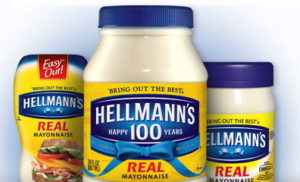 This year marks the centennial of one of the strongest brands in CPG—Hellmann’s Mayonnaise and the company’s marketing is celebrating with an effective campaign that sticks with what has made this the number one brand in the category for most of those 100 years. Hellmann’s is the top-selling mayo since Richard Hellmann started selling it in New York a century ago. Keeping the same product formula—and branding formula—throughout the years, the company has stuck with its “bring out the best” theme for the past 25 years. It’s parent, Unilever, has maintained the same recipe for success from its French roots and continues to insure that it has stayed with Richard’s wife’s version of the original recipe while constantly and consistently showing how mayo makes almost everything taste the best.
 Unfortunately, I don’t believe any advertising—no matter how creative or well placed it is—can make up for the lack of a meaningful brand strategy. Despite all of the aggressive ads, Sears simply isn’t a factor to the consumer anymore. In many of the groups that I present to or work with, I ask the question “How many of you have shopped or considered shopping at Sears over the past 6 months?” The answer is almost universally a resounding “None!” It’s hard to believe, but what was once the #1 retailer in America is no longer a factor for most customers these days. If you wonder why this happened, I suggest considering what Dr. Len Berry of Texas A&M wrote many years ago about what successful store have in common. The number one trait that the hot stores shared then—and now—is that they have a reason for being. And that reason is not just because there are other retailers who offer the same merchandise and services in a similar box. It’s a real reason for existing and for being firmly entrenched into the shopping lists of many consumers. Ask yourself (unless you work there) if Sears disappeared tomorrow, would you really miss them? Would you wonder where you were going to shop for appliances, tools, paint, automotive supplies and service? All of these were distinguishable strengths that Sears once maintained in the marketplaces. They not only were top of mind, but they were almost synonymous with these categories in their heyday.
Recent Comments