
KEEPING SOME GREAT BRANDS ALIVE
PRESS PLAY >> TO VIEW KEN’S WELCOME MESSAGE FOR APRIL.
It’s been reassuring over the past couple years to observe the rebound made by the American car companies. It just seems like a few weeks ago that we were wondering if GM or Chrysler would survive without government help or whether Ford could set new standards for cars that people really wanted to buy and drive. Fast forward and it’s been exciting to see the strides made by the big three both in quality and in brand reputation after so many years of neglect.
That’s why it’s disheartening to see the problems that GM has brought upon itself with the recall scandal and lack of strong leadership in dealing with a PR nightmare.
It’s interesting to note that when the news broke on this situation that most of the brands that were mentioned in the recall problem were no longer in business. It makes you wonder what really happened with Pontiac, Saturn, and Oldsmobile. And where is Mercury and Continental or Plymouth and Thunderbird. All of these brands had great recognition, significant top-of-mind awareness, and (even as sales slumped) a loyal customer and dealer base. Why did they have to die? Brands consistently need to be reviewed, re-formulated, and re-marketed in order to keep up with the changes in customers and competition. However, it seems like the auto companies would rather just call it a day, pack up their design tools, close up the plants and move on.
I was thinking about some the brands that my first employer, Procter & Gamble has developed successfully and then sold off to other companies to continue their market share growth. I worked on Folgers coffee and it continued to be a market share leader in the category for years until P&G decided to focus on other categories of business. They didn’t just close down the brand, however. Instead they sold it to Smuckers who has continued to grow the brand and it’s share with essentially the same successful brand strategy that has been in place for years. Why couldn’t the car companies do the same..
Think about some of these brands and what could possibly have happened to keep them alive and successful.
 I think BMW could have taken over Pontiac and made it an American Driving Machine. For years Pontiac was branded as a performance car and by narrowing its brand focus would still have appeal to a younger, American driver.
 Mercury had a major share of the mature drivers (it was #1 overall in Florida for many years). If Volvo had taken over the brand and refocused it as something more than a Ford with a different emblem and model name, it could capitalize on the quality and dependability that Volvo is known for with the comfort that older Americans want.
 Saturn was one of the best branding stories in any category when it was introduced. Nissan or Toyota could certainly have applied some of their innovations to keep the loyal Saturn customers and again focus the brand on sedans that put it on the map originally (rather than SUV’s and sports cars).
 Thunderbird was a legendary sports car like Corvette and the brand was one of the most successful re-introductions a few years ago. Think what someone like Suburu or Kia could have done to bring Asian quality and design to a sporty new T-bird brand.
 Oldsmobile could have also capitalized on the Baby Boomer market who still wanted some of the quality that their “fathers” wanted in their cars. With a reputation from Hyundai or Land Rover and some re-styling that doesn’t look like another Buick, the brand could prosper in today’s market.
 Look how Fiat/Chrysler has re-introduced the Fiat 500 which had a terrible brand reputation in the ’60’s and ’70’s in the U.S. However, now it’s cute, trendy, and appeals to a whole new market that didn’t even know the care ever existed before.
 If Plymouth had stuck with cars like it’s Land Cruiser and Duster and had the creativity of a Mazda re-branding it , the brand could still be around and have a younger, loyal customer base.
Of course there are many other considerations before a company can sell one of its brands to another company, like manufacturing, dealer organizations, etc. However, there are brands that could still prosper by focusing on their historic strengths and what today’s consumer wants in a vehicle. Bring in some new perspective and creativity and these brands can survive and gain market share. For a brand to be reborn requires the same ingenuity and strategy that is required by new products and innovations. If some of the brands mentioned above had an infusion of branding instead just a new ad campaign with tired model names, the auto industry would still be competitive and a showcase of effective marketing.
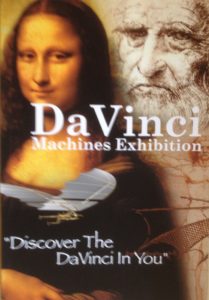 designer. While there were only a limited number of his designs on display (his notes reflected several thousand ideas that were developed), I was convinced that every one was developed for a particular reason—usually military weapons—that provided a solution to a particular problem or opportunity. Whether it was the ball bearing or a device that helped build a pyramid before hydraulics, the value of these concepts increased as the need for their benefits became more obvious in providing a competitive advantage over the users adversary.
 The point is that the first essential characteristic of a successful brand is to have a reason for being. The initial work is to determine why someone would try your product—or keep using it—and then reinforce this reason with an effective, creative message that cuts through the clutter and truly differentiates your brand from the others.
 The Macy’s Thanksgiving Parade is a special tradition that helps kick of the holiday season for retailers all over the world. Yet, it is also a wonderful sales promotion event to generate sales, awareness, and strengthen the store’s brand as a special place for holiday gift purchases.
 Bass Pro Shops has created Santa’s Wonderland at its mega-stores for several years now, but before you say that “Well, what’s new about that? Stores and malls have had Santa for years.) take a trip to your nearest Bass Pro and experience the transformation of the stores and their customers into a Christmas right out of the Hallmark Channel.
 ://www.cbsnews.com/news/westjets-holiday-video-becomes-an-online-sensation/
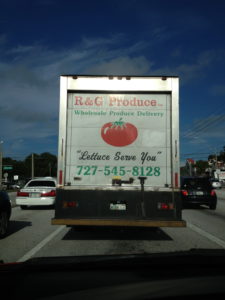 Now, I appreciate a good pun as much as anyone, but when used as a brand’s slogan, I usually find that it to be a weak effort at trying to create something memorable about the product or service. I suppose you could say that this implies better service in getting your lettuce fresh and on time, but it really needs more dressing (Ok, enough puns for now.) to make a differentiating statement. The truck sign did, however, remind me of how many companies try to create a brand by simply coming up with a new slogan or jingle. Most of the ad agencies that I worked with over the years claimed to be branding experts, but so often as soon as they got the assignment, the work started on a new ad campaign, slogan, logo, spokesperson, or package/store design.
Recent Comments